„Even though I would have been nervous about the defense and presentation, I think I have grown in the last four years, and presented so much that I’m more calm right now.“
Branislav Pecher
#growth
Join our PhD program and become an expert in artificial intelligence. Dive into challenging research topics with world-class mentors and industry partners. We welcome curious minds to join our open culture.
Take advantage of an inspiring environment and become a top expert in your selected AI topic. At Kempelen institute, we prioritise ethical responsibility and societal benefit.
When working on your dissertation, you’ll have access to a distinguished supervising team, including industrial partners and/or renowned experts from world-class research institutions.
Choose a research topic that deeply interests you and will enrich the field. At KInIT, we support excellent, original world-class research and the connection with industry and current research and innovation challenges.
Our culture is based on trust, openness and respect. That is how great ideas are born. We share knowledge and innovations not only within the institute, but also with our industry partners and other curious people like you.
You’ll be teamed up with the best researchers in the region and gain invaluable experience and contacts from abroad that will boost your career growth in industry or academia.
You will become a full-time KInIT employee. We will give you all the time and space you need to focus on your research, skills development and growth.
KInIT PhD program is run in partnership with

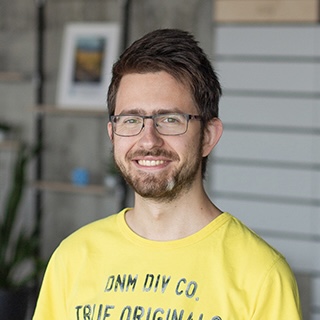
Branislav Pecher
#growth

Patrik Goldschmidt
#impact

Róbert Belanec
#internship

Ivana Beňová
#mentorship

Martin Mocko
#innovative projects

Ján Čegiň
#conferences

Ivan Vykopal
#published paper

Peter Pavlík
#innovative projects

Santiago Jose de Leon Martinez
#team
Supervisor: Michal Kompan (supervisor, KInIT)
Supervising team: Michal Kompan (supervisor, KInIT), Peter Brusilovsky (University of Pittsburgh), Branislav Kveton (Google Research), Peter Dolog (Aalborg University),
Keywords: personalised recommendation, machine learning, user model, fairness, multi
objective and multi stakeholder recommendations, session-based
The recommender systems are an integral part of almost every modern Web application. Personalized, or at least adaptive, services have become a standard that is expected by the users in almost every domain (e.g., news, chatbots, social media, or search).
Obviously, personalization has a great impact on the everyday life of hundreds of million users across many domains and applications. This results in a major challenge – to propose methods that are not only accurate but also trustworthy and fair. Such a goal offers plenty of research opportunities in many directions:
There are several application domains where these research problems can be addressed, e.g., search, e-commerce, social networks, news, and many others.
Relevant publications:
The research will be performed at the Kempelen Institute of Intelligent Technologies (KInIT, https://kinit.sk) in Bratislava in cooperation with industrial partners or researchers from highly respected research units from abroad. A combined (external) form of study and full employment at KInIT is expected.




Supervisor: Mária Bieliková (supervisor, KInIT)
Supervising team: Mária Bieliková (supervisor, KInIT), Branislav Pecher (KInIT)
Keywords: large language models, in-context learning, benchmarking, mechanistic interpretability, metrics and evaluation, robustness, reasoning, dynamic benchmarks
Despite the impressive performance of large language models (LLMs), these models are still not well understood. A lot of effort is dedicated to evaluating the capabilities of LLMs and creating guardrails to prevent potentially harmful behaviours. However, small prompt variations still significantly alter the behaviour of LLMs, they often fail in tasks that are similar to the ones seen in training data but contain a small change, or they can be easily used to generate confident misinformation. As the large language models increasingly mediate access to information and are increasingly used by expert and non-expert users, it is essential to develop rigorous methods for evaluating their true capabilities and identifying the sources of their vulnerabilities.
The goal of this research is to build a deeper and more reliable understanding of the LLM behaviour. The first possible research direction involves designing a benchmark that can accurately measure both advanced capabilities (such as reasoning, planning, understanding, math or multilingual capabilities) and common failure modes and vulnerabilities (including hallucination, brittleness, tendency or ease of generating problematic content such as misinformation). An important focus should be on making the benchmark robust to the current issues of data contamination and minimising the resources needed to run it. The second possible research direction leverages mechanistic interpretability to study the internal structures that drive the LLM behaviours. These tools will be used to investigate why specific vulnerabilities arise, how the capabilities arise, and whether targeted interventions can reduce failures while maintaining core capabilities.
By integrating robust behavioural benchmarking with mechanistic insights, the project aims to produce a more principled understanding of how LLMs work and how they can be made safer and more reliable. The application domain includes (but are not limited to) low-resource tasks, multilingual understanding, misinformation and other problematic behaviour detection (narrative detection) or even LLM user simulation.
Relevant publications:
The research will be performed at the Kempelen Institute of Intelligent Technologies (KInIT, https://kinit.sk) in Bratislava in cooperation with researchers from highly respected research units. A combined (external) form of study and full employment at KInIT is expected.


Supervisor: Jakub Šimko (supervisor, KInIT),
Supervising team: Jakub Šimko (supervisor, KInIT), Ján Čegiň (KInIT)
Keywords: low-resource AI, LLM, data synthesis, data augmentation, text processing
Despite the proliferation of large language models (LLMs) with their proclaimed universal applicability, many tasks of automatic text processing remain insufficiently solved. Tasks that need to be solved in low-resource languages are solved with lower success. Tasks that require sensitivity to details, context, or fresh information also remain problematic. Examples at the intersection of both these dimensions include processing data from social media for the purpose of detecting narratives, analyzing discourse, detecting toxic content, detecting organized influence campaigns, revealing manipulation, supporting fact-checking, or auditing social media recommenders.
Since the above problem can be understood as a lack of data for specific tasks, one of the solutions can be to use the capabilities of LLMs, but not directly as task solvers, but rather for generation or augmentation of data samples. Using these, specialized (smaller) models could be created for specific tasks. The advantage of such an approach is a higher degree of control over the final model (we can control the generated data), as well as a lower price and footprint of the final model (it is smaller). On the other hand, the disadvantage of such an approach is its lower straightforwardness and methodological ambiguity.That ambiguity, however, offers an opportunity for research.
The topic of the dissertation envisions research of methods and methodologies for creating automatic approaches for classification (or other automatic processing) of texts in heterogeneous and unstable domains. These are characterized by a lack of resources, primarily labeled data, but secondarily also limited computing power.
Relevant publications:
The research will be performed at the Kempelen Institute of Intelligent Technologies (KInIT, https://kinit.sk) in Bratislava in cooperation with industrial partners or researchers from highly respected research units. A combined (external) form of study and full employment at KInIT is expected.


Supervisor: Dominik Macko (supervisor, KInIT)
Keywords: generative AI, large language models, metrics and evaluation, machine learning
The multilingual capabilities of large language models (LLMs) enable us to generate texts in many languages, or even to analyze the existing multilingual texts. However, there are missing standard methods and metrics to measure the quality of multilingual texts. Analysis, evaluation, and annotation of such texts by humans is costly and time-consuming, while the replicability of the annotations is questionable (due to ensuring the annotators consistency). In some languages, it is quite difficult to obtain human annotations, while also balancing the level of expertise and demographic diversity of annotators across languages. For a while, the researchers are experimenting with using LLMs themselves to evaluate various aspects of text quality (e.g., coherence, grammar correctness, linguistic acceptability) in multiple languages, whether the texts are generated by language models or written by humans. Even the LLM annotations can be biased due to internal biases of the meta-evaluation models caused by training data.
It is important to continually increase the robustness of meta-evaluation (to limit biases and increase objectivity), whether by increasing the number of evaluation LLMs or by ensuring diversity via LLM (person-like) behavior modifications. The feasibility of the meta-evaluation method must be considered by assessing the computational efficiency and overall practical usability. Also, it is required to measure the correlation between meta-evaluation and human judgement and to evaluate for which aspects of text quality and in which languages is such meta-evaluation a suitable and usable alternative.
Relevant publications:
The research will be performed at the Kempelen Institute of Intelligent Technologies (KInIT, https://kinit.sk) in Bratislava in cooperation with industrial partners or researchers from highly respected research units involved in international projects. A combined (external) form of study and full employment at KInIT is expected.

Supervisor: Róbert Móro (supervisor, KInIT)
Keywords: generative AI, large language models, human-LLM interaction, LLM alignment
Large language models (LLMs) are increasingly being used for a wide range of tasks and in various contexts in an interactive (chat-like) manner. The challenge is to make this interaction aligned with human expectations and values while avoiding reinforcing biases or negative social behavior of a model such as sycophancy, manipulativeness, etc. To do this, we need to be able to measure the extent of a positive or a negative behavior of the model and (ideally) have large datasets of human-LLM interactions together with human preferences that can be used to tune the models. For the latter, synthetic data generated by models trained on actual users’ data can sometimes be used instead.
The main goal is to improve the human-LLM interaction by using human inputs (such as their preferences) to fine-tune LLMs’ conversational capabilities while controlling for unwanted behavior (such as biases, sycophancy, manipulativeness, etc.). Alternatively, the topic can focus on measurement of the negative or positive social behavior of LLMs in various situations and contexts, or on improving safety of the models while taking the context and user preferences into account.
The application domains are diverse, including (but not limited to) auditing of LLMs’ safety with respect to various user groups (including children and young adults), misuse of LLMs for disinformation generation, or credibility signals detection and assessment.
Relevant publications:
The research will be performed at the Kempelen Institute of Intelligent Technologies (KInIT, https://kinit.sk) in Bratislava in collaboration with industrial partners or researchers from highly respected research units involved in international projects. A combined (external) form of study and full employment at KInIT is expected.
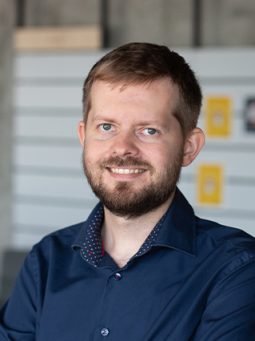
Supervisor: Ivan Srba (supervisor, KInIT)
Keywords: user interaction prediction, generative AI, large language models
The proliferation of AI-driven recommendation systems on social media has intensified the need for methods that can anticipate how users engage with presented content. While current “digital twin” approaches simulate the behaviour of specific individuals, this PhD project is motivated by the need to predict the next interaction of user archetypes, i.e., personas defined by demographic and interest attributes. With the rapid evolution of generative AI models, including LLMs and multimodal systems, their capabilities to forecast user actions such as clicking, liking, skipping, or dwelling on social-media content remain unexplored.
The core objective of the PhD research is to investigate and compare AI-based approaches for predicting the next user interaction in social media environments, focusing on user archetypes rather than individuals. To do this, the work will explore generative modelling strategies (e.g., LLM-based predictors), multimodal encoders, and hybrid architectures capable of processing and reacting to streamed online content. A significant part of the thesis will address real-time content annotation, identifying which text/image/video attributes best predict behavioural responses, and how Parameter-Efficient Finetuning Techniques (PEFTs) can be used to adapt models rapidly and cost-effectively. The project will also analyse evaluation methodologies for sequential user-interaction forecasts, including simulation-based benchmarks that reflect realistic platform dynamics.
The domain of application will be algorithmic auditing, a research practice that evaluates how algorithmic systems operate and whether they comply with legal, ethical, or performance expectations. More accurate next-interaction prediction models can make these auditing approaches substantially more authentic, enabling simulated agents to behave in a more organic, human-like manner when interacting with recommender systems. Such improvements can strengthen audit validity, allow testing at scale, and produce a deeper understanding of the impact that recommender design has on different user archetypes.
Relevant publications:
The research will be performed at the Kempelen Institute of Intelligent Technologies (KInIT, https://kinit.sk) in Bratislava in collaboration with industrial partners or researchers from highly respected research units involved in international projects. A combined (external) form of study and full employment at KInIT is expected.

Supervisor: Viera Rozinajová (supervisor, KInIT)
Supervising team: Viera Rozinajová (supervisor, KInIT), Anna Bou Ezzeddine (KInIT), Gabriela Grmanová (KInIT)
Keywords: machine learning models, scientific machine learning, knowledge representation, transfer learning, energy domain, environment
Current challenges that the energy sector faces today include maintaining stability in the energy grid, aggregation of flexibility, operation of energy communities, smart charging of electric vehicles, and efficient use of battery storage. Renewable resources are strongly dependent on weather, so weather prediction is also a focus of interest.
The ENVIRO team at KInIT is dedicated to the aforementioned tasks, whereas the proposed solutions are based on machine learning and artificial intelligence. We investigate and experiment with various methods such as taking into account physical laws in machine learning models (physics-informed machine learning), transfer or federative learning, as well as reinforcement learning, a currently popular approach used to optimize decision-making in a dynamic environment. Foundational models and their comparison with traditional approaches also offer an interesting direction of research. We solve tasks that process time series as well as image data using computer vision methods.
The aim of the PhD thesis will be to propose a solution to a selected energy or environmental problem (for example, flexibility aggregation or climate modeling/weather forecasting) by applying advanced artificial intelligence approaches. The selection of appropriate machine learning methods will depend on the specifics of the problem being solved and the choice of the doctoral candidate.
Relevant publications:
The research will be performed at the Kempelen Institute of Intelligent Technologies (KInIT, https://kinit.sk) in Bratislava in cooperation with industrial partners or researchers from highly respected research units from abroad. A combined (external) form of study and full employment at KInIT is expected.



Supervisor: Marián Šimko (supervisor, KInIT)
Supervising team: Marián Šimko (supervisor, KInIT), Jana Kosecka (George Mason University)
Keywords: large language models, natural language processing, trustworthy NLP, multilingual learning, information extraction
The rapid progress of large language models (LLMs) and other foundation models has transformed natural language processing (NLP), enabling powerful applications such as conversational agents, code assistants, and advanced information access systems. These technologies already affect everyday life and are reshaping how organisations work with text and knowledge.
Despite their success, LLMs still face important open challenges. Many models behave as black boxes, can hallucinate content, reproduce social biases, or fail when moved to new domains, tasks, or low-resource languages. At the same time, there is growing demand for models that are trustworthy, efficient, and easy to adapt, while respecting data, safety, and regulatory constraints.
This PhD project will investigate methods for understanding, adapting, and controlling large language models, with a particular focus on trustworthiness and low-resource / domain-specific NLP. The work can combine theory, modelling, and practical experimentation on real-world datasets.
Illustrative research challenges include:
The topic offers substantial flexibility and can be tailored to the candidate’s interests, ranging from more theoretical work on model behaviour to application-driven research in collaboration with academic or industrial partners.
Relevant publications:
The research will be performed at the Kempelen Institute of Intelligent Technologies (KInIT, https://kinit.sk) in Bratislava in cooperation with industrial partners or researchers from highly respected research units from abroad. A combined (external) form of study and full employment at KInIT is expected.


Supervisor: Michal Gregor (supervisor, KInIT)
Keywords: large language models, AI, reasoning, machine learning, deep learning, LLM limitations, reinforcement learning, mechanistic interpretability
Large language models (LLMs) are currently driving much of the progress in the area of artificial intelligence, especially due to their ability to perform a wide range of tasks zero-shot – based on a natural language description of the task – and due to the large amount of world knowledge they possess.
However, the current generation of LLMs still struggles in several important ways that bar them from becoming truly capable at a wide range of challenging tasks; these struggles include e.g. their:
Apart from these, there is also the limited ability to efficiently learn from experience (which is a component in how humans achieve true competence – we possess powerful priors, but we can also adapt quickly) and many other struggles. While this is – to a very considerable extent – true of all current models, the issues are typically much more pronounced for small models. This, of course, has serious implications for a lot of applications that require compact models, which can be run locally.
The aim of this research is to:
Relevant publications:
The research will be performed at the Kempelen Institute of Intelligent Technologies (KInIT, https://kinit.sk) in Bratislava in cooperation with industrial partners or researchers from highly respected research units from abroad. A combined (external) form of study and full employment at KInIT is expected.

We provide PhD study in collaboration with the Faculty of Information Technology at VUT, Brno (Czechia). You’ll be enrolled at the faculty as an external doctoral student. After you’re accepted for study, you’ll work as a full-time employee at our institute. Your doctoral research will be your primary job role.
You can choose from multiple interesting topics of your dissertation. They are based on different mentoring schemes:
You’ll have access to an expert supervising team. Depending on the selected scheme, it can include industrial partners and/or a scientist from a renowned foreign university.
While working at our institute you’ll be a member of a KInIT research team. The teams collaborate on various projects or on other activities:
The rest is up to you! Turn your curiosity and passion for intelligent technologies into new discoveries or inventions making the world a better place.
Mária Bieliková Lead researcher, KInIT Viac info Michal Gregor Lead researcher, KInIT Viac info Michal Kompan Lead researcher, KInIT Viac info Viera Rozinajová Lead researcher, KInIT Viac info Mária Bieliková is an expert researcher at KInIT. She focuses on human-computer interaction analysis, user modeling and personalization. Recently, she has been working in data analysis and modeling of antisocial behavior on the Web. She is active in discussions on trustworthy AI at the national and European levels. Maria has supervised 20 successful doctoral graduates to date. She co-authored 70+ journal publications, 250+ conference papers, received 6,700+ citations (Google Scholar h-index 37), and serves on the editorial board of two CC journals. She has been the principal investigator in 40+ research projects.
Michal Gregor is an expert researcher at KInIT. He focuses especially on artificial neural networks and deep learning, on reinforcement learning, and more recently on multi-modal learning and learning that involves language supervision. Michal also has experience in other areas of AI such as metaheuristic optimization methods, representation of uncertain knowledge, probabilistic models and more.
Michal Kompan is an expert researcher at KInIT. He focuses on recommender systems, machine learning, user modeling, and information retrieval. His research is focused on predictive modeling and customer behavior (e.g., churn prediction, next-item recommendation), as well as content-based adaptive models. Michal serves as a reviewer or/and program committee member at several international conferences, such as RecSys, SIGIR, WWW, ADBIS, Hypertext, UMAP and SMAP.
Viera Rozinajová is an expert researcher at KInIT. She is focusing on intelligent data analysis, particularly predictive modeling, cluster analysis, anomaly detection and optimization. Before her employment at KInIT, she worked as an associate professor at the Faculty of Informatics and Information Technologies at the Slovak University of Technology in Bratislava, where she headed up the Big Data Analysis group. She has authored/co-authored more than 70 publications in scientific journals and conferences and has participated in more than 25 national and international research projects and has led several of them.
Jakub Šimko Lead researcher, KInIT Viac info Marián Šimko Lead researcher, KInIT Viac info Ivan Srba Senior researcher, KInIT Viac info Róbert Móro Senior researcher, KInIT Viac info Jakub Šimko is an expert researcher at KInIT, where he also leads the Web and User Data Processing team. Jakub focuses on the intersection of human computation, machine learning and user modeling. He has recently been working on social media algorithm auditing, misinformation modeling and promotes interdisciplinary approaches to computer science research. He graduated from Slovak University of Technology in Bratislava, where, after receiving his PhD, he worked for 7 years as a researcher and teacher. He co-authored more than 30 internationally recognized publications, together receiving more than 350 citations.
Marián Šimko is an expert researcher at KInIT. Marián focuses on natural language processing, information extraction, low-resource language processing and trustworthiness of neural models. He is a former vice-dean for Master’s study and alumni co-operation at the Slovak University of Technology.
Ivan Srba is a senior researcher at KInIT. Ivan has expertise in artificial intelligence and machine learning, with a focus on data emerging from user behavior on social computing and collective intelligence systems, such as social networks, knowledge sharing systems and e-learning. His current primary research interest is in countering online disinformation and misinformation.
Róbert Móro is a senior researcher at KInIT. He focuses on user modeling, personalization and machine learning. His current primary research interest is in countering online disinformation and modeling users and human-computer interaction on the Web. He has participated in several international research projects (including Horizon Europe) and served as a program committee member at several conferences (e.g., ACM UMAP, ACM ETRA, IJCAI).
Dominik focuses on energy efficiency and security in the Internet of Things environment, from a communication point of view as well as from a device point of view. He focuses on reduction of unnecessary control overhead to create a secure channel and transmit data by strictly power-managed sensor nodes. Also, he deals with anomaly and intrusion detection in IP networks based on communication statistics. Recently, he focuses on robust detection of multilingual machine-generated text.
Peter Brusilovsky Professor, University of Pittsburgh, USA Viac info Peter Dolog Associate Professor, Aalborg University, Denmark Viac info Jana Kosecka Professor, George Mason University, USA Viac info Branislav Kveton Principal Scientist, Adobe Research, USA Viac info Peter Brusilovsky is a Professor at the School of Computing and Information, University of Pittsburgh, where he directs the Personalized Adaptive Web Systems (PAWS) lab. His research is focused on user-centered intelligent systems in the areas of adaptive learning, recommender systems, and personalized health. He is a recipient of Alexander von Humboldt Fellowship, NSF CAREER Award, and Fulbright-Nokia Distinguished Chair. Peter served as the Editor-in-Chief of IEEE Trans. on Learning Technologies, and a program chair for several conferences including RecSys.
Peter Dolog is an Associate Professor at the Department of Computer Science, Aalborg University, Denmark. His current research interests include machine learning and data mining in the areas of user behavior analysis and prediction, recommender systems, preference learning, and personalization. Peter is a senior member of ACM, served as a senior program commitee member of AI related conferences as well as a general chair of UMAP, HT and Web Engineering conferences.
Jana Kosecka is a Professor at the George Mason University. She is interested in computational models of vision systems, acquisition of static and dynamic models of environments by means of visual sensing, high-level semantic scene understanding and human-computer interaction. She held visiting positions at UC Berkeley, Stanford University, Google and Nokia Research, and served as Program chair, Area chair or senior member of editorial board for leading conferences in the field CVPR, ICCV, ICRA.
Jana is currently mentor of our PhD student: Ivana Beňová
Branislav Kveton is a Principal Scientist at Adobe research. He proposes, analyzes, and applies algorithms that learn incrementally, run in real time, and converge to near-optimal solutions as they learn. He made several fundamental contributions to the field of multi-armed bandits. His earlier work focused on structured bandit problems with graphs, submodularity, and low-rank matrices, and ranked lists. His recent work focuses on making bandit algorithms practical
 Peter Richtárik Professor, King Abdullah University of Science and Technology, Saudi Arabia Viac info
  Martin Takáč Associate Professor, Mohamed Bin Zayed University of Artificial Intelligence, United Arab Emirates Viac info
  Peter Tino Professor, University of Birmingham, UK Viac info
  Simeon (Akis) Papadopoulos Researcher, CERTH Viac info
 Peter Richtárik is a Professor of Computer Science & Mathematics at KAUST. He is one of the founders and a Fellow of the Alan Turing Institute. Through his work on randomized and distributed optimization algorithms, he has contributed to the foundations of machine learning and federated learning. He serves as an Area Chair of leading machine learning conferences, including NeurIPS, ICML and ICLR.
Martin Takáč is an Associate Professor and Deputy Department Chair of Machine Learning Department at MBZUAI, where he is a core faculty at the Optimization & Machine Learning Lab. His current research interests include the design and analysis of algorithms for machine learning, applications of ML, optimization, HPC. He serves as an Area Chair of ML conferences such as AISTATS, ICML, and NeurIPS.
Peter Tino is a Professor at the School of Computer Science, University of Birmingham, UK. He is interested in the interplay between mathematical modelling and machine learning (dynamical systems, probabilistic modelling, statistical pattern recognition, natural computation). Peter is interested in both foundational aspects and applications in interdisciplinary contexts (e.g. astrophysics, biomedical sciences, cognitive neuroscience).
He is a Fellow of the Alan Turing Institute and has served on editorial boards of leading journals such as IEEE TNNLS, IEEE TCYB, Neural Networks and Scientific Reports.
Dr. Symeon Papadopoulos is a Principal Researcher at the Information Technologies Institute (ITI), Centre for Research and Technology Hellas (CERTH), Thessaloniki, Greece. He holds a Professional Doctorate in Engineering from the Technical University of Eindhoven, a Master’s in Business Administration from the Blekinge Institute of Technology and a PhD in Computer Science from the Aristotle University of Thessaloniki. His research interests lie at the intersection of multimedia understanding, social network analysis, information retrieval, big data management and artificial intelligence.
 Simon Ostermann Senior Researcher & Lead, DFKI Viac info
  Anders Søgaard Professor, University of Copenhagen Viac info
 Simon Ostermann is a computational linguist and senior researcher at the Multilinguality and Language Technology (MLT) lab at the German Research Center for Artificial Intelligence (DKFI). His research interests are mainly on transparent and robust language models and language technology. In his work, he mostly uses large language models trained with deep learning methods.
Professor in Natural Language Processing and Machine Learning at the University of Copenhagen. Jointly affiliated with the Dpt. of Computer Science, the Dpt. of Philosophy, the Pioneer Centre for Artificial Intelligence, and the Center for Social Data Science. Previously at The University of Potsdam, Amazon Core Machine Learning, and Google Research.
Transform your curiosity into excellence. If you are interested in doing a PhD degree at KInIT, let us know as soon as possible. Fill in the PhD @ KInIT expression of interest form no later than March 31st.