Better Slovak language support in AI requires stronger involvement of Slovakia in European initiatives.
Marián Šimko
Lead and Researcher, Kempelen Institute of Intelligent Technologies
Building AI for some languages is much easier than for others. English, for example, has vast amounts of data and language resources available, while smaller languages such as Slovak have much less to work with. Developing AI for Slovak therefore takes a concerted effort, with researchers and companies bringing their expertise together.
Bringing these people together was exactly the aim of AI po slovensky, lorAI’s flagship conference. On November 12, 2026, Galéria Umelka in Bratislava became a meeting point for people working on Slovak language technologies. Academia and business were at the centre of the programme, with public institutions joining us too. The whole day was dedicated to AI in Slovak.
The day started with a round table for the Slovak natural language processing (NLP) community. Participants from different institutions shared what they had been working on, and the discussion soon turned to cooperation and possible partnerships. There was a lot to catch up on, with many participants adding their own experience to the discussion.
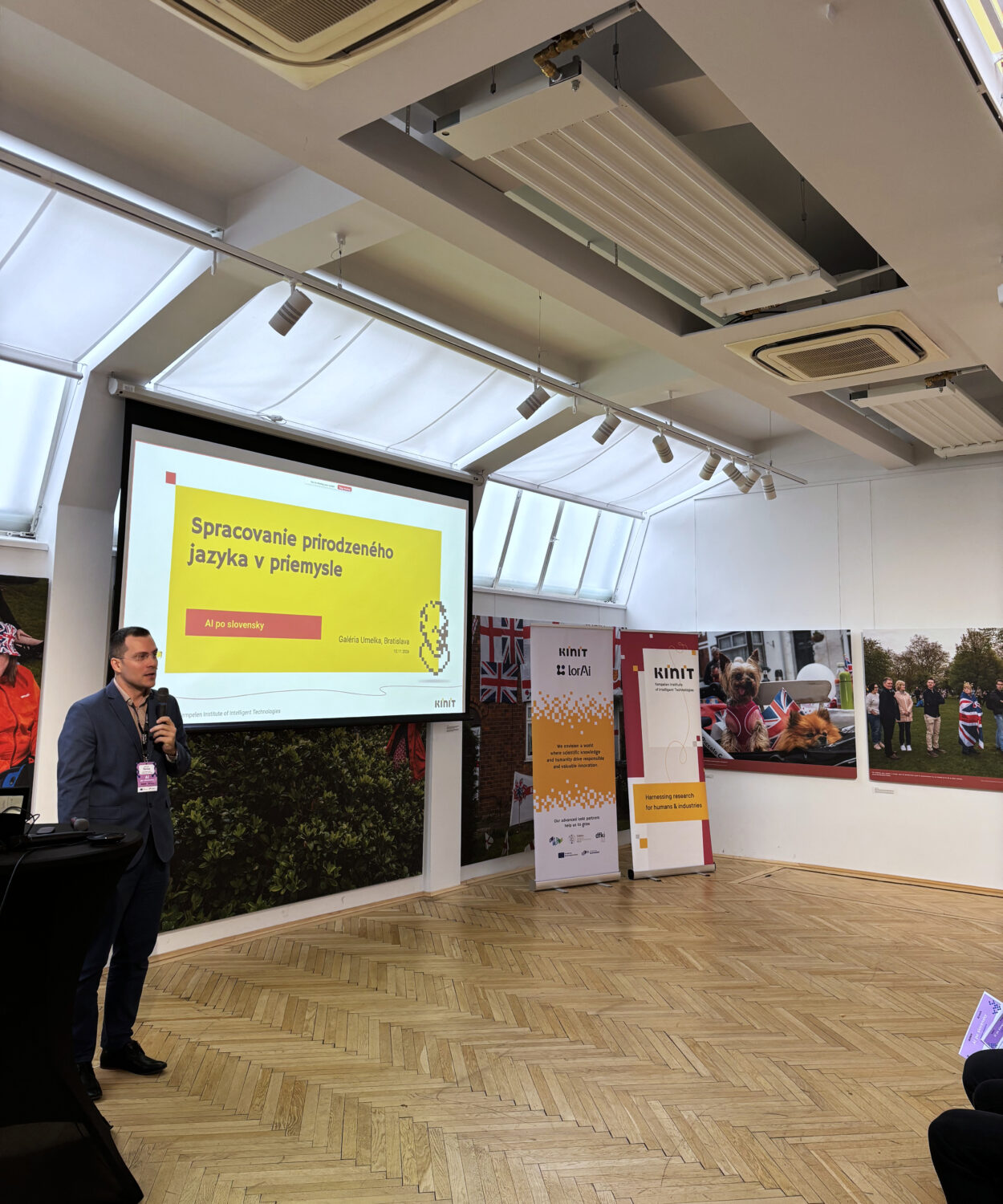
Later in the morning, our NLP lead Marián Šimko introduced a session dedicated to the industry perspective. Company representatives each had a few minutes to share how they are using AI in Slovak. For researchers in the room, it was a chance to see how these technologies fit into business and get to know the people putting them to use.
We also heard from our researcher Juraj Podroužek, who explored digital humanism and trustworthy AI in practice. His talk focused on the people affected by AI and the choices made during its development.
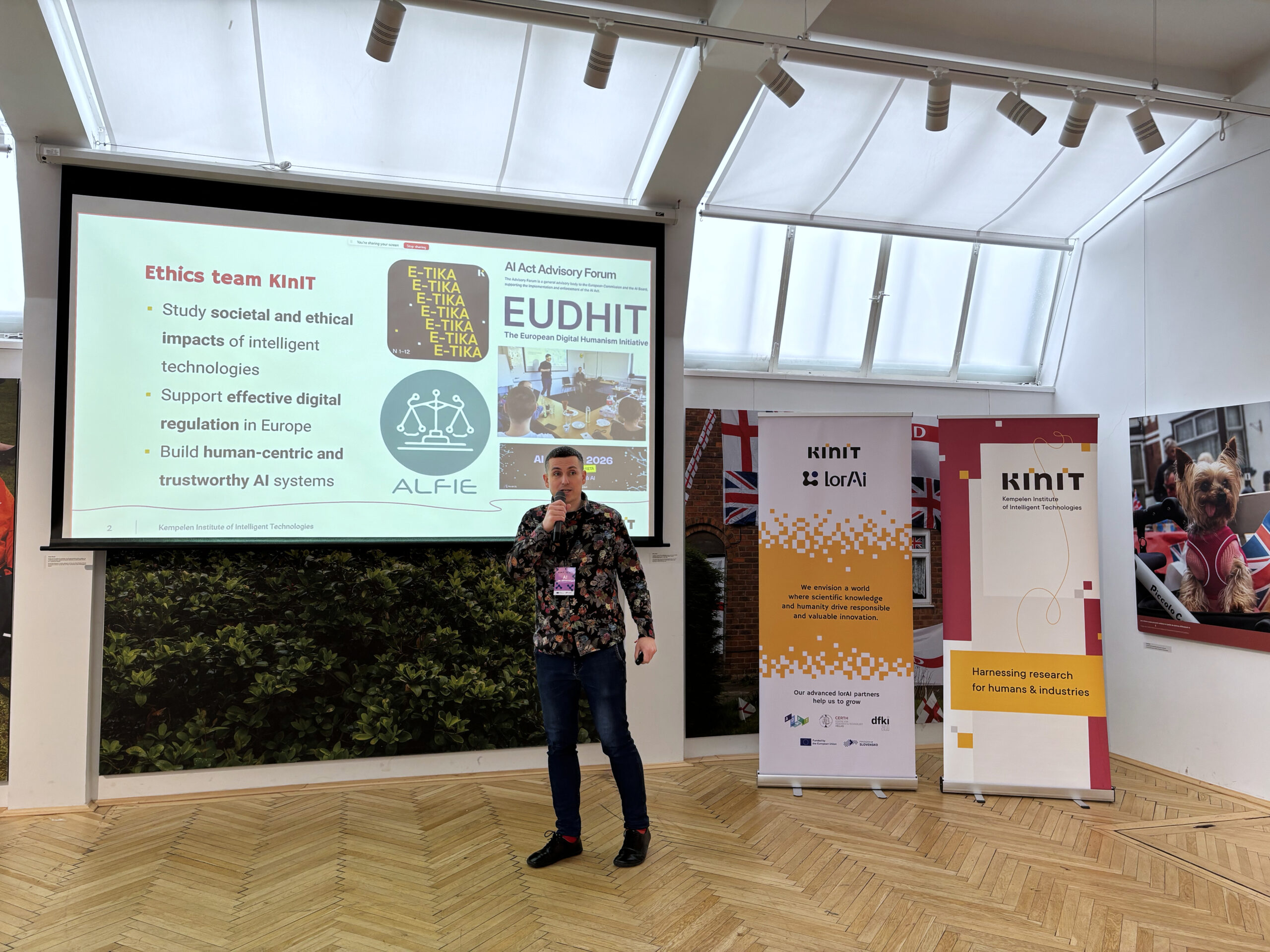
Juraj walked us through risks such as discrimination and loss of privacy, and explained how ethics-based assessments can help teams identify and address them. He also highlighted the value of sharing experience across research and industry when developing trustworthy AI.
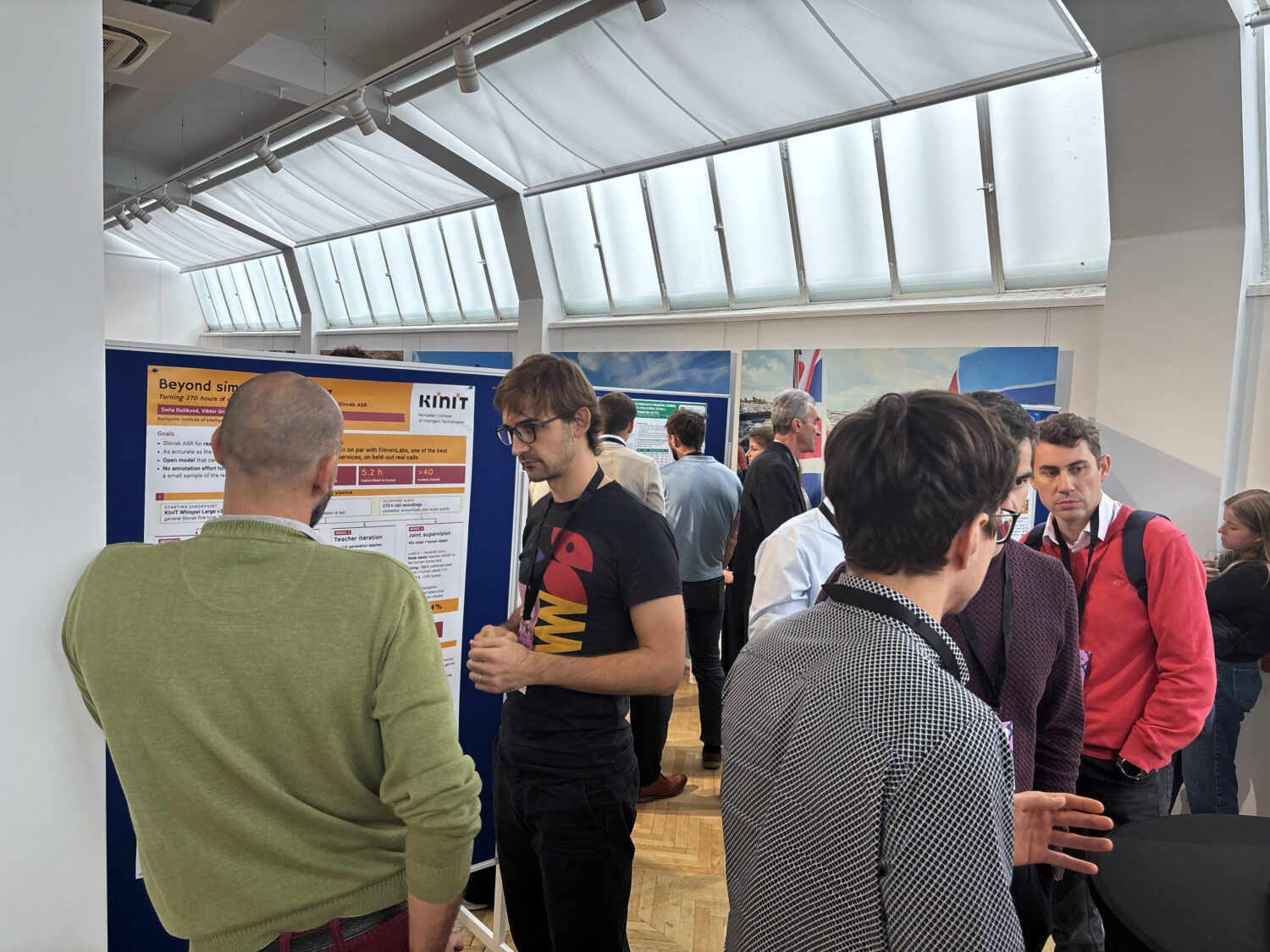
The poster sessions offered another way to explore the work being done in Slovak NLP. Topics included Slovak benchmarks such as sk-bench and SkMTEB, as well as research on speech recognition.
Having the researchers there gave us time to ask questions and get into more detail about their work. It was also a welcome chance to hear about projects we might not otherwise have come across and get to know colleagues from other institutions a little better.
In the afternoon, invited speaker Jan Hajič from Charles University introduced OpenEuroLLM, a project he coordinates to develop open language models for European languages. The project brings research organisations and companies together, with goals that include making training data open to inspection and collecting additional data for languages with fewer resources.
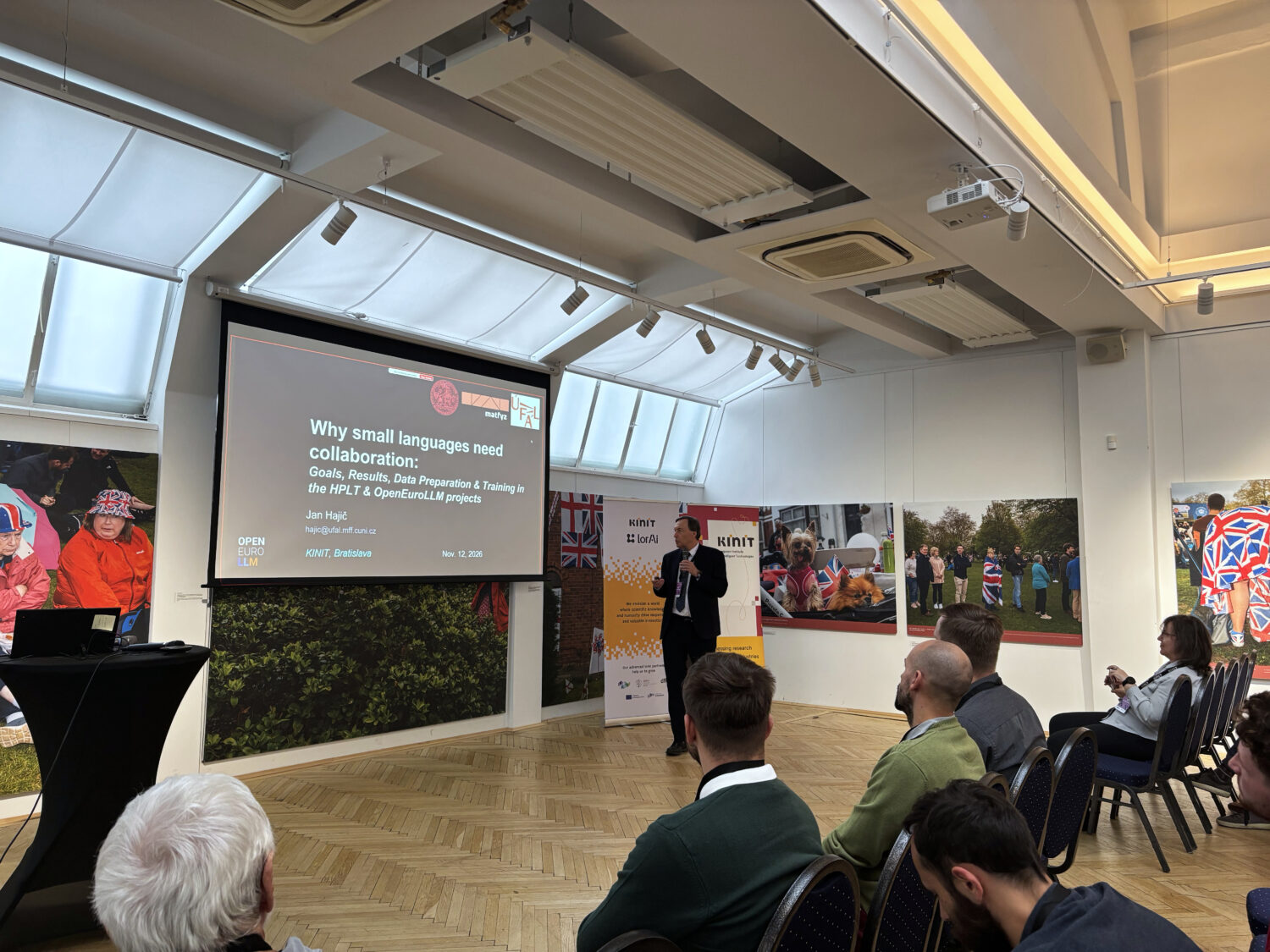
Questions from the audience also touched on practical needs, including why smaller models would be easier for companies to run with limited hardware. For languages such as Slovak, these shared European efforts also offer a way to bring together data and expertise that would be harder to develop in isolation.
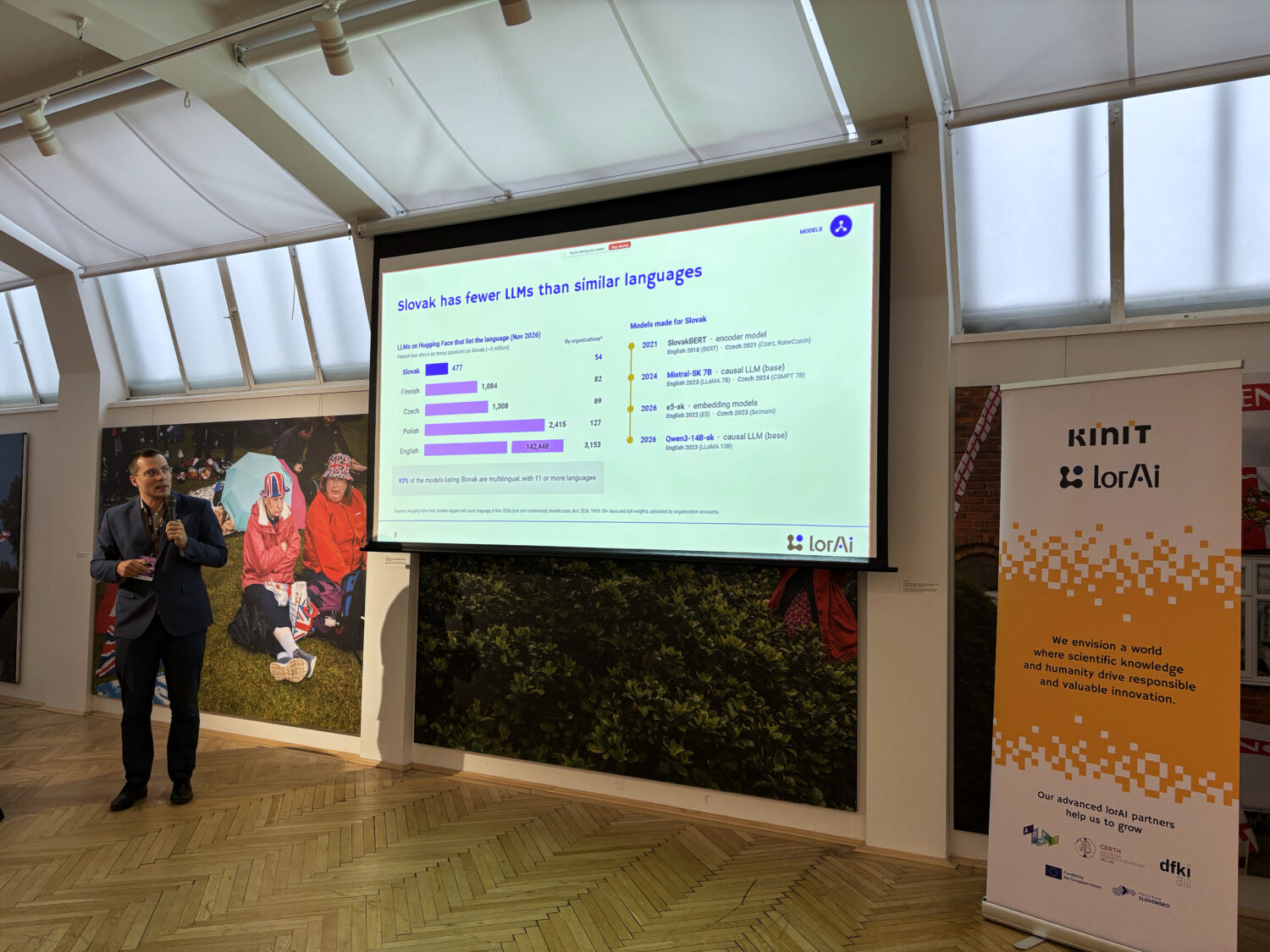
Marián then brought the focus back to Slovak. He looked at the resources already available and the gaps that still need to be addressed. He also spoke about the Slovak Language AI Hub (SLAIH), our open platform, which brings Slovak datasets, models, tools and benchmarks together in one place. For a low resource language, having these resources accessible can make a real difference. It helps teams find relevant materials and advance the work already underway, making it easier for the Slovak NLP community to move forward together.
The question of what Slovak needs next carried over into the panel on language sovereignty. The discussion was moderated by Marián, and featured Jan Hajič, Juraj Gazda from the Technical University of Košice, Juraj Jánošík from ESET and Radoslav Štefánek, Government Plenipotentiary for AI.
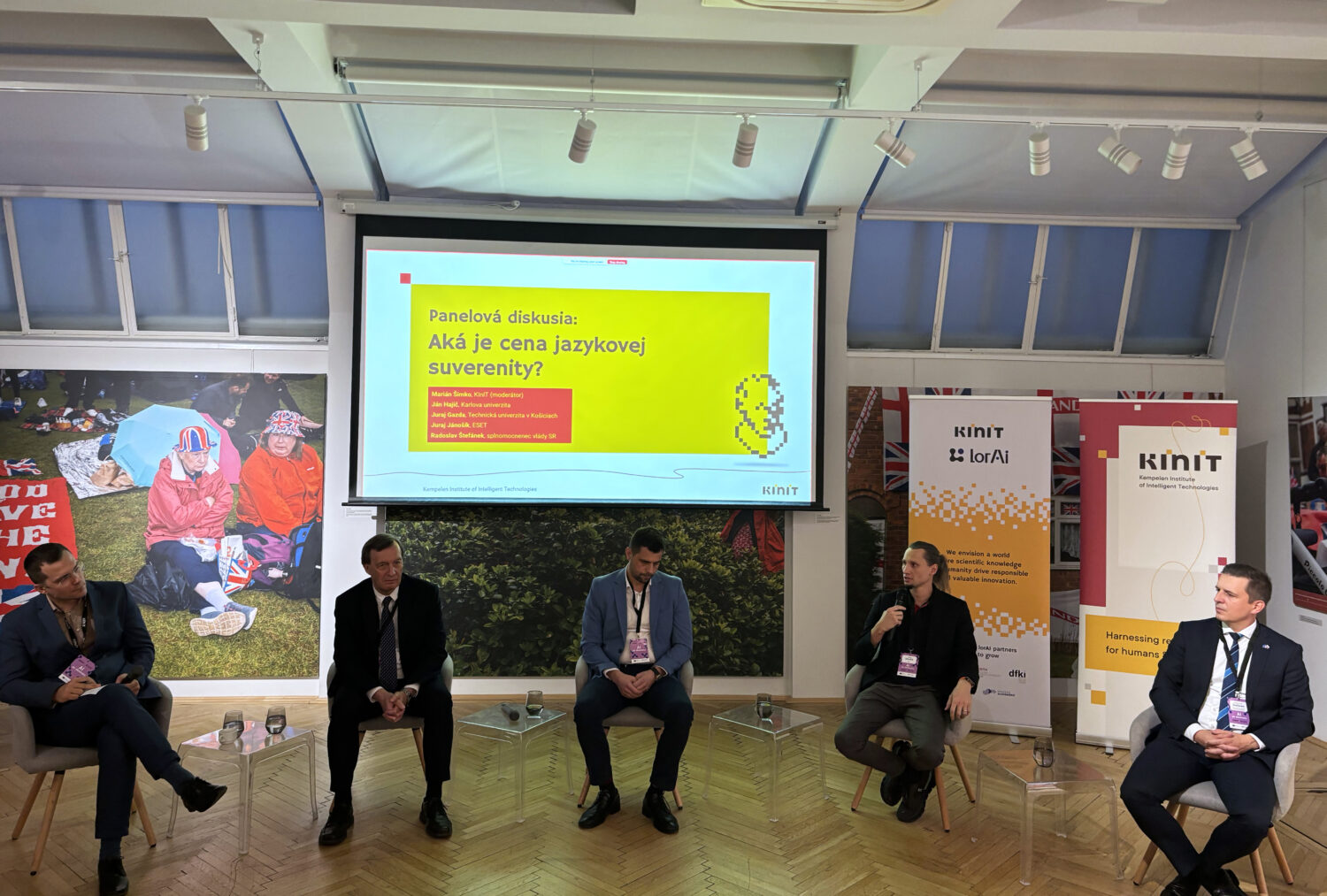
The panel began with people’s own experiences of using AI in Slovak. Some panellists described checking outputs manually, and Juraj Jánošík noted how performance can change between model versions.
Alongside the possibility of developing models of our own, there is the need to evaluate and adapt models created elsewhere. That calls for reliable Slovak data and benchmarks, along with people who know how to use them.
European cooperation is important here, too. It can help smaller language communities share resources and expertise and bring their needs into the debate about how these technologies are developed.
Marián Šimko
Lead and Researcher, Kempelen Institute of Intelligent Technologies
We came away from the day with a better sense of what others in the community are working on. There were new ideas to explore and quite a few conversations we would happily pick up again. It was a joy to see how keen people were to hear from each other.
Slovak is a low resource language with a resourceful community behind it. A big thank you to our speakers and everyone who made time to join us. We’re already looking forward to the next chance to compare notes!