



What's
May 28. 2025
KInIT Natural Language Processing Summer School 2026
The next edition of KInIT’s Natural Language Processing Summer School will take place from September 2nd to September 4th 2026. The main goal of the event is to provide participants with an introduction to natural language processing – the area that currently drives much of the progress in AI.
The event will take place at the Kempelen Institute for Intelligent Technologies (KInIT) in Bratislava, and it will be conducted by experts from KInIT and our partner institutions. The event is free of charge. We are planning to welcome mostly university students (any year of study), but we are also open to considering applications from talented high school students / other participants. The capacity of the venue is limited so the participants will be selected based on their application forms.
Kempelen Institute of Intelligent Technologies (KInIT) is an independent, non-profit institute dedicated to intelligent technology research. On our mission of interconnecting academia and industry, we bring together and nurture experts in artificial intelligence and other areas of computer science, with connections to other disciplines.
When?
- 2nd – 4th September 2026
Detailed programme
The programme combines guided learning blocks, expert discussions, and informal opportunities to meet researchers working on NLP and AI at KInIT and partner institutions.
- Learning sessions
- Panel discussions
- Joint PhD event
- Social program
| 2. 9. | Large Language Models and Agentic AI | |
|---|---|---|
| 8:30 – 9:00 | Welcome breakfast | |
| 9:00 – 9:05 | Opening | 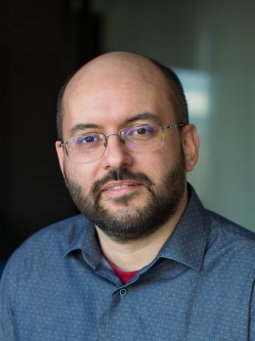 Michal Gregor Michal Gregor |
| 9:05 – 10:35 | Introduction to large language models |  Jaroslav Kopčan Jaroslav Kopčan |
| 10:35 – 10:50 | Coffee break | |
| 10:50 – 12:30 | Agentic AI |  Marcel Veselý Marcel Veselý |
| 12:30 – 13:15 | Lunch | |
| 13:15 – 14:50 | Agentic engineering: from 0 to eiπ |  Marek Šuppa Marek Šuppa |
| 14:50 – 15:05 | Coffee break | |
| 15:05 – 16:40 | Evaluating LLMs |  Andrej Ridzik Andrej Ridzik |
| 18:00 – 21:00 | Social event | |
| 3. 9. | Multimodal AI, Interpretability, and Fine-tuning | |
|---|---|---|
| 9:00 – 10:35 | Understanding audio and speech with language models |  Viktor Gregor Viktor Gregor |
| 10:35 – 10:50 | Coffee break | |
| 10:50 – 11:50 | Panel discussion with AI experts: Whose model speaks your language? |  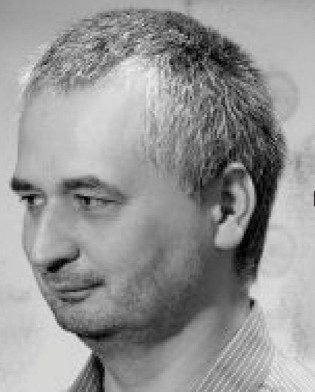   |
| 11:50 – 12:30 | Vision-language models |  Ivana Beňová Ivana Beňová |
| 12:30 – 13:15 | Lunch | |
| 13:15 – 14:50 | Mechanistic interpretability | Michal Gregor Kamil Burda Kamil Burda |
| 14:50 – 15:05 | Coffee break | |
| 15:05 – 16:40 | Fine-tuning LLMs (SFT, RLVR, LoRA) |  Ivan Vykopal Ivan Vykopal |
| 4. 9. | Research Pathways, Robustness, Ethics, and Future Directions | |
|---|---|---|
| 09:00 – 10:00 | Beyond scaling: the future ingredients of intelligence | Michal Gregor |
| 10:00 – 10:30 | Coffee break | |
| 10:30 – 11:40 | (Lack of?) Robustness of large language models |  Branislav Pecher Branislav Pecher |
| 11:40 – 12:30 | Lunch | |
| 12:30 – 14:00 | Poster session | PhD students and interns |
| 14:00 – 15:30 | Ethics panel: AI as a reflection of our minds? Anthropomorphism and ethics of human-AI interaction |  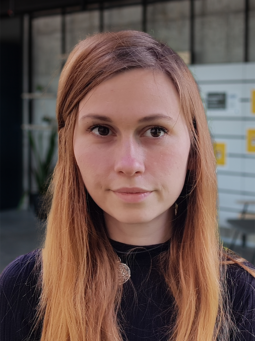 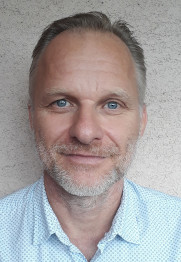 |
Partner Speakers
-
 Peter Bednár Technical University of Košice More info
 - Igor Farkaš Comenius University Bratislava More info
- Radovan Garabík Ľ. Štúr Institute of Linguistics, Bratislava More info
- Nora Hargaš Consulting & Coaching More info
- Marek Šuppa Comenius University Bratislava More info
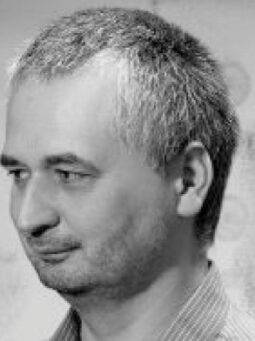
Peter Bednár is a Senior Researcher and Lecturer at the Faculty of Electrical Engineering and Informatics at the Technical University of Košice (TUKE). He earned his PhD in Artificial Intelligence and works on knowledge management, text and data mining, natural language processing, and distributed architectures for Big Data processing. He has participated in numerous European research projects spanning areas such as smart cities, data analytics, and digital services, including H2020 Monsoon, Picasso, FP7 Urban Sensing, Adapt4EE, SPIKE, FP6 Access e-Gov, KP-Lab, and FP5 Webocracy.
Selected work:
Training of Large Language Model Mistral on Slovak Language Data, Journal of Linguistics 2025
Slovak Legal AI: Exploring Large Language Models for Court Decision Prediction
Igor Farkaš is a professor at the Department of Applied Informatics and the Centre for Cognitive Science at the Faculty of Mathematics, Physics and Informatics, Comenius University in Bratislava. His research focuses on artificial neural networks, cognitive science, language learning, cognitive robotics, reinforcement learning, and explainable AI. He is particularly interested in computational approaches to understanding learning and cognition, including brain-inspired neural network models. He also coordinates the Centre for Cognitive Science and has extensive experience teaching AI and neural networks.
Selected work:
Will multimodal large language models ever achieve deep understanding of the world?, Frontiers in Systems Neuroscience 2025
Toward an Interaction-Centered Approach to Robot Trustworthiness
Radovan Garabík is a computational linguist at the Ľ. Štúr Institute of Linguistics of the Slovak Academy of Sciences in Bratislava. His work connects linguistics and computer science, with a particular focus on computational processing of language and language resources. He has contributed to the development and processing of Slovak linguistic data and is actively involved in the Slovak NLP community.
Selected work:
Training of Large Language Model Mistral on Slovak Language Data, Journal of Linguistics 2025
A Parallel Cross-Lingual Benchmark for Multimodal Idiomaticity Understanding
Nora Hargaš works in consulting, coaching, and education, with a focus on the human aspects of professional and personal development. She regularly leads seminars and lectures and collaborates with psychologists and psychotherapists. Her current work explores how therapy takes place in practice and how new technologies and approaches can interact with the therapeutic process. She is also a colleague of Miklós Csémy, founder of Neurodiverzita.CZ, and is involved in discussions around neurodiversity and contemporary approaches to mental health and therapy.
Marek Šuppa is a lecturer in Artificial Intelligence at the Faculty of Mathematics, Physics and Informatics at Comenius University in Bratislava and leads the Data Team at Slido. His teaching and research focus on machine learning, natural language processing, and practical applications of AI. He has previously worked on search technologies at DuckDuckGo and is actively involved in Slovak NLP research and community activities.
Organising Team
Michal Gregor
Researcher
Ivana Beňová
AI Specialist

Petra Polačeková
HR & Marketing Intern

Marián Šimko
Lead and Researcher
Partners



How to attend?
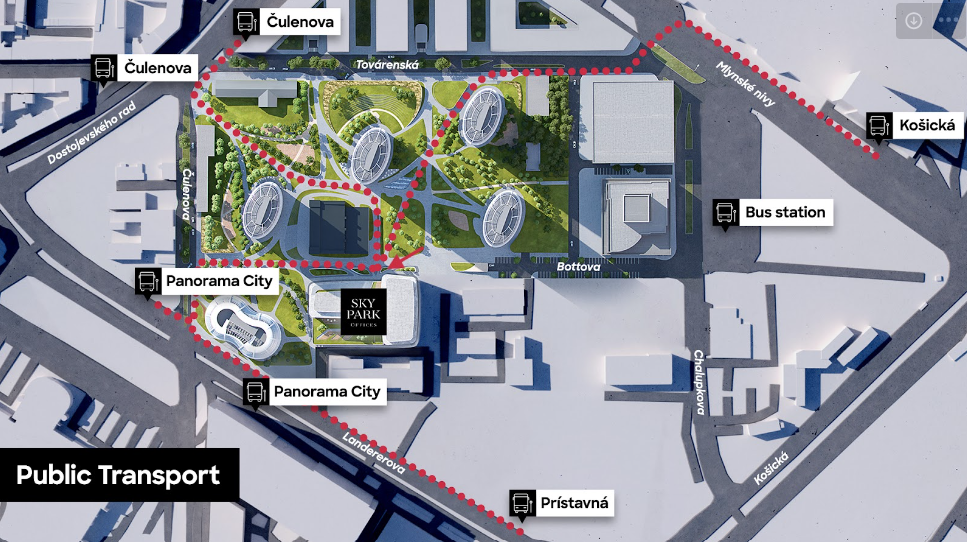
The event will take place from September 2nd to September 4th 2026, in the KInIT offices at The Spot on the 6th floor.
About us:
Natural language processing (NLP) is the intersection of information technology and linguistics. It is concerned with processing the huge amounts of unstructured natural language data that emerge at lightning speed in the digital era – the age of social networks. We research and deliver novel methods to improve NLP tasks of different types while covering multiple stages of text processing.
Our research combines various approaches, from linguistic and statistical to machine learning and deep learning. We employ novel language models that take advantage of recent advances in the field while covering a variety of application domains. We focus on open problems related to text classification, information extraction, sentiment analysis and text generation. We look for applications of transfer learning and improving the interpretability of NLP models. Our work includes the processing of low-resource languages, such as Slovak.
Read more information about our research here.