


What's
May 26. 2026
Where Are Humans Still Better Than AI? Michal Valko on Uncertainty and the Future of Technology
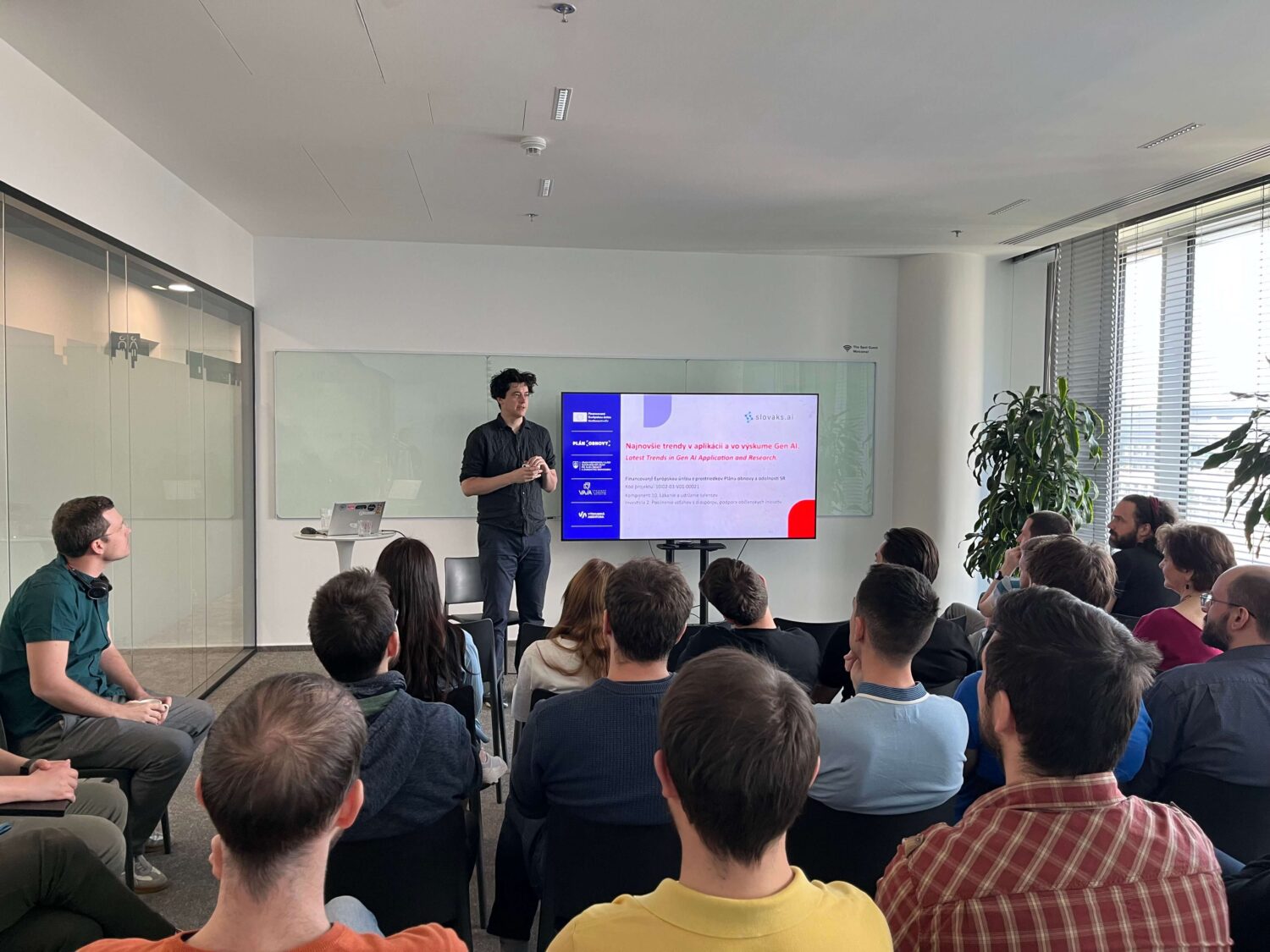
The world of artificial intelligence is advancing at an incredible speed and we at KInIT are always excited when we can bring a piece of this global progress directly here to Slovakia. On April 27, we welcomed an exceptional host whose name resonates in top world laboratories. Michal Valko is a recognized expert who was involved in the building of Paris Google DeepMind, and worked as a leading engineer at Meta on the development of the Llama 3 model.
Through the slovaks.ai project we connect Slovak talents with the world-class experts. That’s why we took advantage of this unique opportunity and conducted an interview with Michal, in which we discussed technical challenges, the future of companies and also the topic of how to keep talents at home.
In what ways are we as humans still better than AI?
It is about uncertainty. Currently, artificial intelligence is an excellent summariser of all the world’s knowledge; essentially, it is like Wikipedia on steroids. It can answer any question because it has seen more information than any individual or group of people combined, and in this regard, it has already surpassed us. However, what humanity is very good at, and where AI is still very weak, is the ability to work with uncertainty. We humans can process information from various sources – we learn something from others, read something in a book, or catch something on television – and despite all these uncertainties, we can form a judgement that is not entirely wrong and behave accordingly. AI is still very bad at this. For instance, if AI recommended that we undergo a bypass surgery, we certainly could not rely on it blindly. This is precisely where the great challenge lies: how to ensure that AI itself knows how certain it is of its answer. While this is not a problem for the simplest models, such as logistic regression, we have no idea how complex neural networks handle uncertainty. Solving this problem will be an essential shift to the next level of AI development.
In your opinion, what should a modern company of the future look like?
The perspective on this topic has changed significantly in recent years. Previously, the focus was on how to create AI specifically for medicine, accounting, or public administration, but today this approach is becoming a thing of the past. The current challenge is not to build companies that do “AI for something,” but to have institutions that are digitally native at their core. We want to have top-tier pharmacies, tax advisors, or government strategists who use AI as their primary tool and a natural part of their work, rather than just utilizing external AI solutions.

Where do you see the biggest obstacles for scientists in translating theoretical research into practical application?
I see the main problem in the fact that AI researchers often lack real-world practical experience. They frequently come up with new algorithms and only then look for where to apply them. However, the correct path starts with understanding a specific customer problem. We need people who are almost morbidly passionate about solving a specific problem, rather than tasks assigned just because they were part of a project. Only such passion will bring scientists many times more real-world outputs than before.
What should states do to effectively develop and retain talent in the era of artificial intelligence?
Countries must focus primarily on creating a quality ecosystem. Talent cannot be developed by decree or simply by purchasing technology and issuing calls for proposals. The state must guarantee an environment where people can freely develop their ideas and where investors have the certainty that their investments will return if successful. Governments should prioritise removing bureaucratic obstacles and avoid introducing unnecessary taxes or complex processes. The talented people are already here, but if we don’t give them opportunities and the right conditions, they will find them elsewhere.
Should skilled professionals return home from abroad, or is it possible to effectively influence the country’s level even from a distance?
In my view, it is not crucial where a person is physically located, but rather where they can help the most. Personally, I probably help Slovakia more by being abroad 90% of the time. If I were at home 100% of the time, I might achieve a thousand times less. So, the question is not whether people should return, but how they can best contribute. We cannot force the motivation to help one’s country. Our task is to educate people so well that they are grateful for what we gave them, and later have a natural desire to give something back to the country themselves.
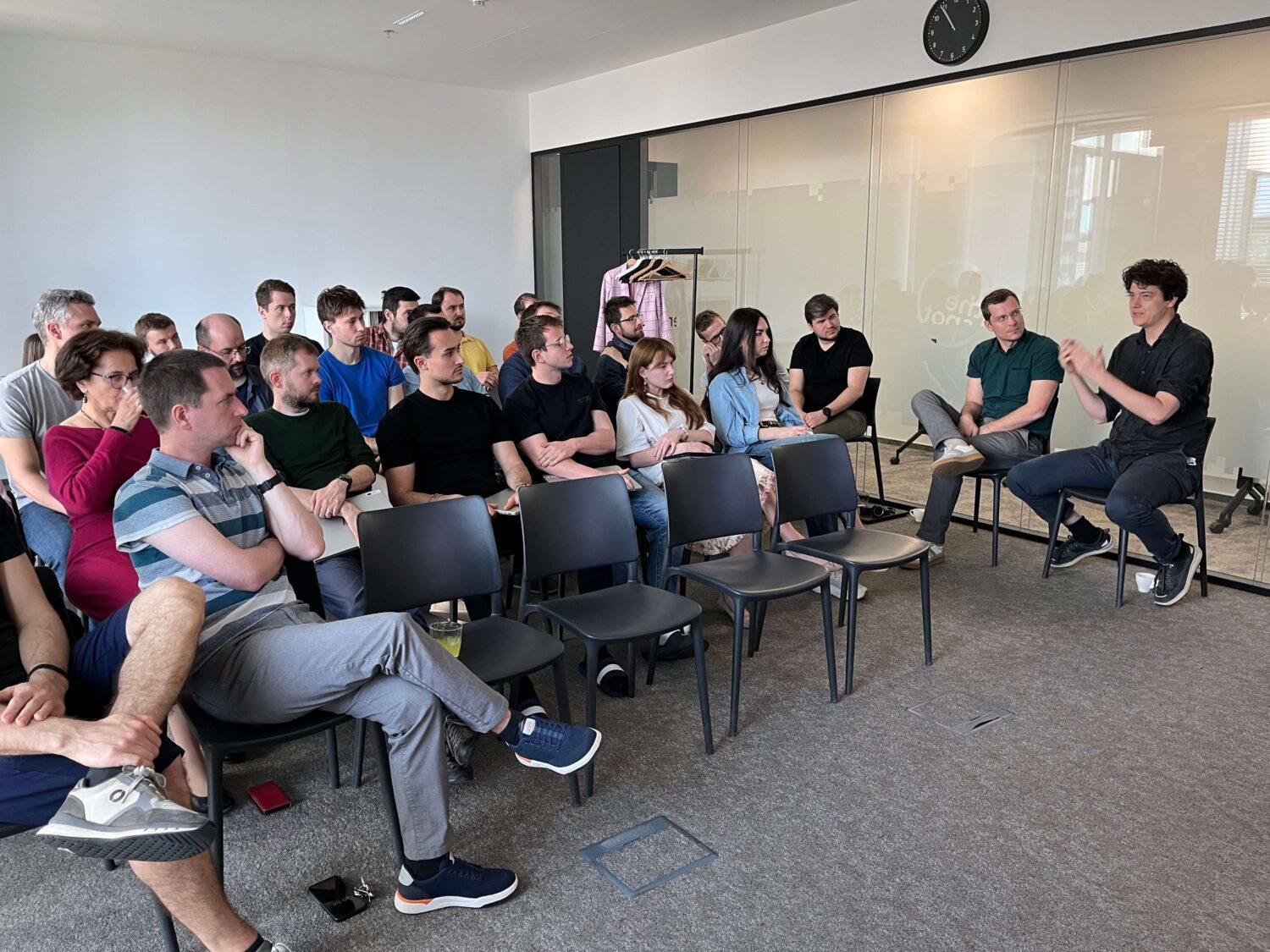
Meetings with people like Michal Valko repeatedly remind us what an enormous potential we have scattered all over the world. We are very grateful that also thanks to the slovaks.ai project we can build and strengthen relationships with our professionals and experts abroad.