



Research Group

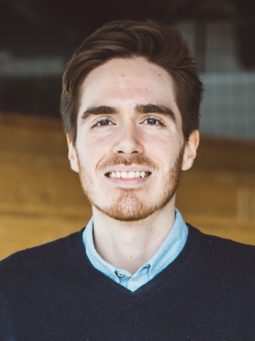
Santiago de Leon-Martinez
Research areas: Interface-Aware Recommender Systems, User Modeling, Eye Tracking, Psychiatry & Psychology
Position: Volunteer
Santiago is a Spanish American PhD student in the MSCA Eyes4ICU doctoral network. He is a leading researcher in the areas of interface-aware recommender systems and carousel-based (Netflix-like) recommender systems. His work combines eye tracking, user modeling, and algorithmic development to better align recommender systems with real human behavior. His research interests are focused on applied user modeling (i.e., representing humans through their data) across multiple domains and more theoretical work on algorithmic optimization.
He has a master’s degree in Health Information Engineering from the University Carlos III of Madrid and three bachelor’s degrees from the University of Kentucky (BA chemistry, BS Spanish literature, and BS theoretical mathematics). He began university level research in high school, as part of a gifted and talented program, and has previously worked in the fields of physics, neurobiology, chemistry, and mathematics. At the University of Kentucky, he received the highest merit-based scholarship that provided a full ride for undergraduate study. In 2018, he joined two research groups in Madrid, Spain, one in psychiatry at the Jiménez Díaz Foundation and the other in machine learning at the University Carlos III of Madrid, where he began his work in ML/AI and user modeling. His 20+ publications span the fields of mathematical number theory, psychiatry/psychology, machine learning, eye tracking, and recommender systems.
PhD topic: Eye-tracking the consumption of recommended information online
Supervising team: Mária Bieliková (KInIT), Róbert Móro (KInIT)
Objectives: Recommendation uses machine learning to predict users’ interest in the content from the users’ interaction, mostly clicks. However, there is a presentation bias (users tend to click more on the first items in the list) and self-selection bias (users tend to rate more items they like than the ones they dislike) in play in the observed data which negatively impacts the performance of the recommender systems. The objective of the project is to use remote eye tracking to:
(1) model the users’ consumption of the recommended items and their interaction with the recommender systems,
(2) debias the observed implicit feedback and
(3) improve existing offline and online evaluation methodologies.
From the eye tracking perspective, the challenge lies in the dynamic nature of the web interfaces where the recommendations are presented; content (targets) can change position over time or they can be overlayed by a different content; the project will therefore also contribute to the development of methods for mapping gaze to targets, while also accounting for the inaccuracies in the measurements that can arise from using eye tracking in an uncontrolled environment of the web.
Expected Results:
1) Computational model of users’ interaction with the recommender systems explicitly modeling positional, visual, and other biases by means of eye tracking;
(2) Evaluation methodology for recommender systems incorporating remote eye tracking;
(3) Computational methods of the collected gaze data processing adapted for the dynamic nature of the web focusing on mapping the gaze to the correct targets (elements/items on the webpage) and accounting for possible inaccuracies in the measurements
Selected achievements
- ICTIR 2025 Conference Honorable Mention for Best Paper: Rethinking Click Models in Light of Carousel Interfaces: Theory-Based Categorization and Design of Click Models
- SIGMOD Student Travel Award for WSDM ‘24
- Horizon EU MSCA Eyes4ICU Doctoral Network Student
- Co-author of Alicia Koplowitz Foundation Neuroscience Research Grant, a 45,000€ private research grant for Conduct Analysis of Children and Adolescents with Abuse History
- University of Kentucky Otis A. Singletary Scholar
Selected activities
- First author and main presenter of the UMAP 2026 Gothenburg, Sweden Tutorial: Interface-Aware Recommender Systems in collaboration with Stanford University and University of Pittsburgh
- Creator and first author of the RecGaze Dataset: the first eye tracking and user interaction dataset for carousel interfaces.
- Industry stay of 3 months with Eyes4ICU industry partner, UX, and RecSys company UI42, consulting on GenAI and recommender systems
- Research visit of 2 months at the University of Stuttgart with Eyes4ICU external supervisor Andreas Bulling’s CAI research group focusing on eye tracking processing for user models
- Designed and led an international eye tracking user study in Slovakia and the Netherlands in collaboration with the University of Amsterdam IRLab and Eyes4ICU industry partners Eye Square and Blickshift Analytics
- Designed and led a clinical study of impulsivity and decision-making in psychiatric patients combining VR, speech analysis, eye tracking, psychological tasks, impulsivity measures, and electrodermal activity in Madrid at the Jiménez Díaz Foundation university hospitals
- Machine learning summer schools attendance: ESSAI & ACAI 2023 and Google Deepmind EEML MLSS 2023
Professional service
As a program committee member or reviewer for international venues:
- ACM ETRA: Symposium on Eye Tracking Research & Applications
- ACM RecSys: Recommender Systems Conference
- ACM KDD: Conference on Knowledge Discovery and Data Mining
As a member of:
- Founding member of Marie Curie Alumni Association Slovakia Chapter
Selected Projects
Selected Publications
Rethinking Click Models in Light of Carousel Interfaces: Theory-Based Categorization and Design of Click Models
Kang, J.1, de Rijke, M.1, de Leon-Martinez, S., Oosterhuis, H.2 1 University of Amsterdam, Amsterdam, Noord-Holland, Netherlands 2 Radboud University, Nijmegen, Gelderland, Netherlands Click models are a well-established for modeling…
Automatic patient functionality assessment from multimodal data using deep learning techniques – Development and feasibility evaluation
Sükei, E.1, de Leon-Martinez, S., Olmos, P. M.2, Artés, A.3 1 Department of Signal Theory and Communications, Universidad Carlos III de Madrid, Leganés, Madrid, Spain 2 Gregorio Marañón Health Research…