Čo je

okt 1. 2026
Let’s talk AI: KInIT at European Researchers’ Night 2026
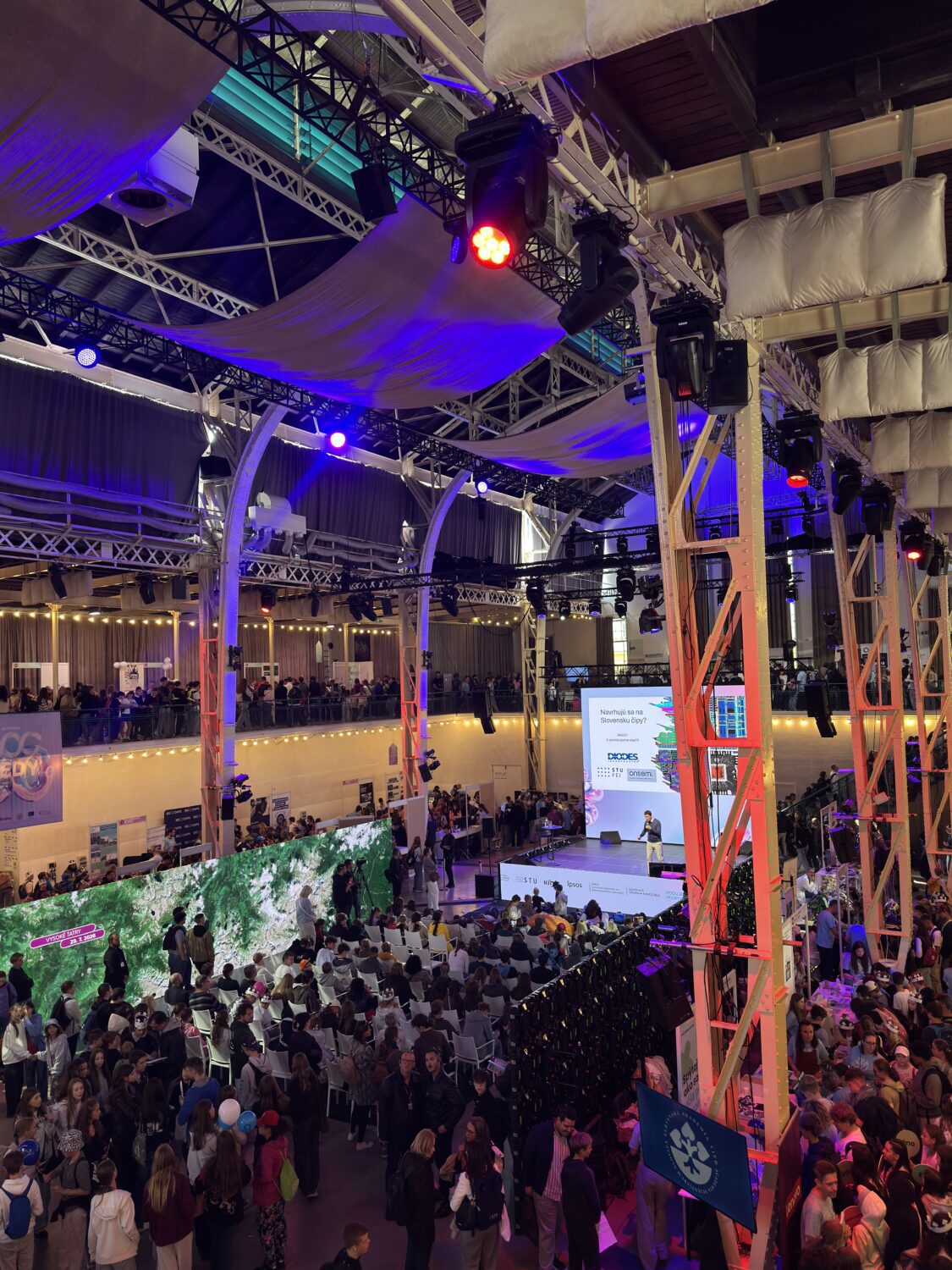
You don’t have to be an AI expert to have a question about it. Perhaps a chatbot once gave you an answer that sounded totally convincing but turned out to be wrong. Or you’ve wondered why the same kind of content keeps appearing in your feed. At European Researchers’ Night on September 25th, we invited visitors to explore these everyday experiences with us and to understand the research behind them.
We were happy to return to the festival in Bratislava, this year as the expert lead of the Information, AI and Freedom of Choice zone. Our research explores how AI shapes the information we see and the choices we make, and the event gave us a chance to discuss these topics with a wider audience.
Exploring AI together
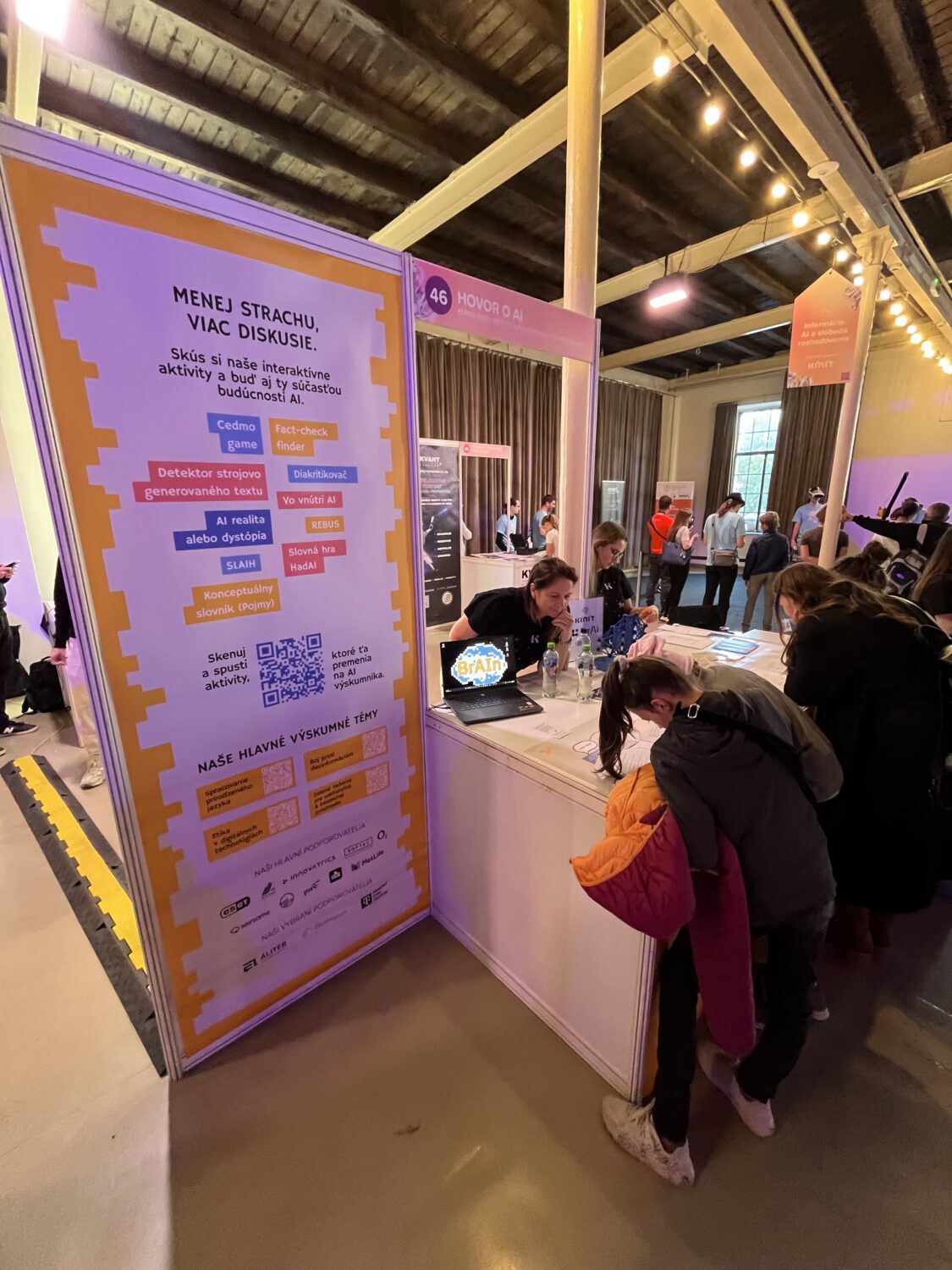
We named our main stand Let’s talk AI because that’s exactly what we enjoy doing: talking to people about AI and our research! Our interactive activity encouraged visitors to think more deeply about different aspects of AI. Together, we explored the topics they were most curious about.
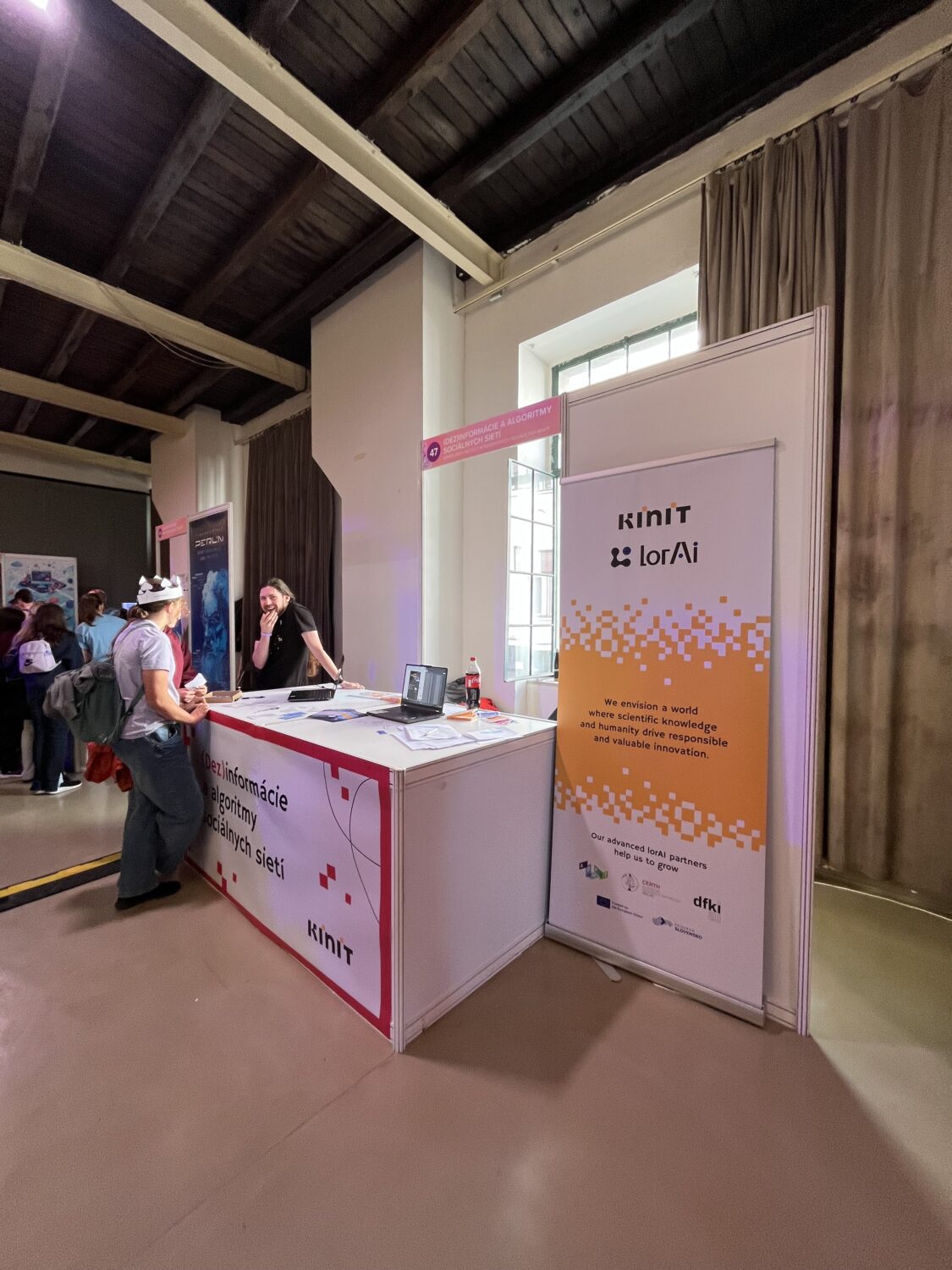
At our (Dis)information and Social Media Algorithms stand, the CEDMO game gave visitors a pretty unusual task. They had to feed an AI system false information on purpose and watch how it responded. Then they switched sides so they could look at the problem from the investigator’s point of view, learning how our researchers study recommendation systems and trying ways to fact-check information available online. Younger visitors could practise spotting advertisements and misleading content, too.
Some activities put the decisions in visitors’ hands. At our Responsible and Trustworthy AI stand, they considered examples of AI used in places like schools and courts and guessed which systems already exist and which ones we made up. In another challenge, they became European lawmakers and sorted AI systems into a risk pyramid. To decide where each one belonged, they had to think about the people it could affect.
Children could explore the topic through drawing. They designed a robot for a specific job and asked themselves whether it really needs to look like a human. And if you were in the mood for a good debate, Change My Mind was the place to challenge arguments about AI ethics. Basically, there were lots of ways to join in.
Our researchers on stage
Beyond our stands, our colleagues also took these subjects to the stages at Stará tržnica and V-klub. In What Is Good and Bad About AI?, our researchers Juraj Podroužek and Daniela Vacek talked about why a conversation with a chatbot can feel so personal, and what happens when we start trusting it as if we’d trust another person.
After all, it feels nice when an answer agrees with us. The trouble starts when that agreement supports something wrong or even harmful. Juraj and Daniela discussed this tendency, called sycophancy, and about why a comforting reply still deserves a careful look.
Their advice was pretty down to earth. Double-check the information AI gives you and think twice about the personal details you share with it. And step away from the screen sometimes to spend time with people you trust.
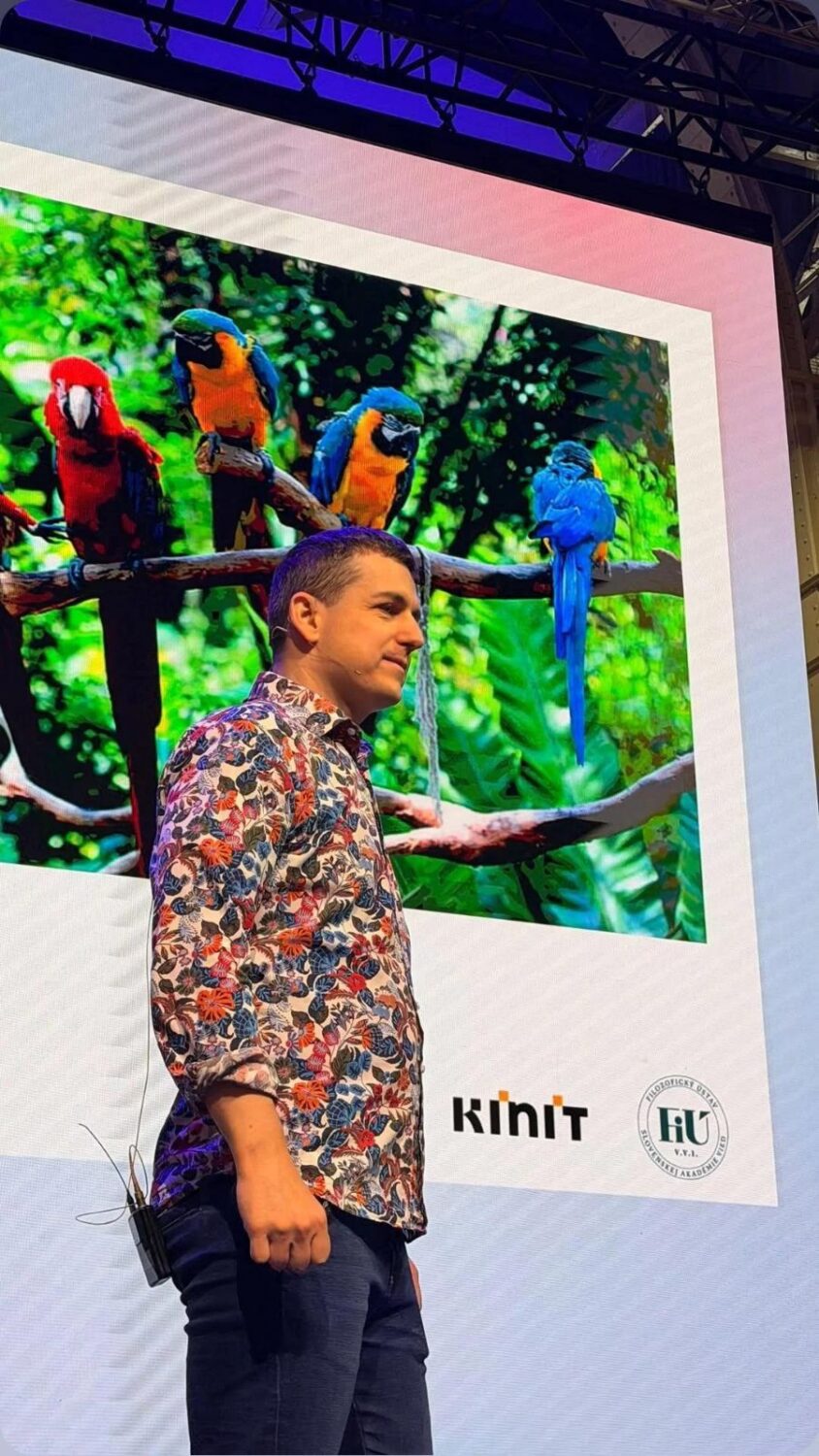
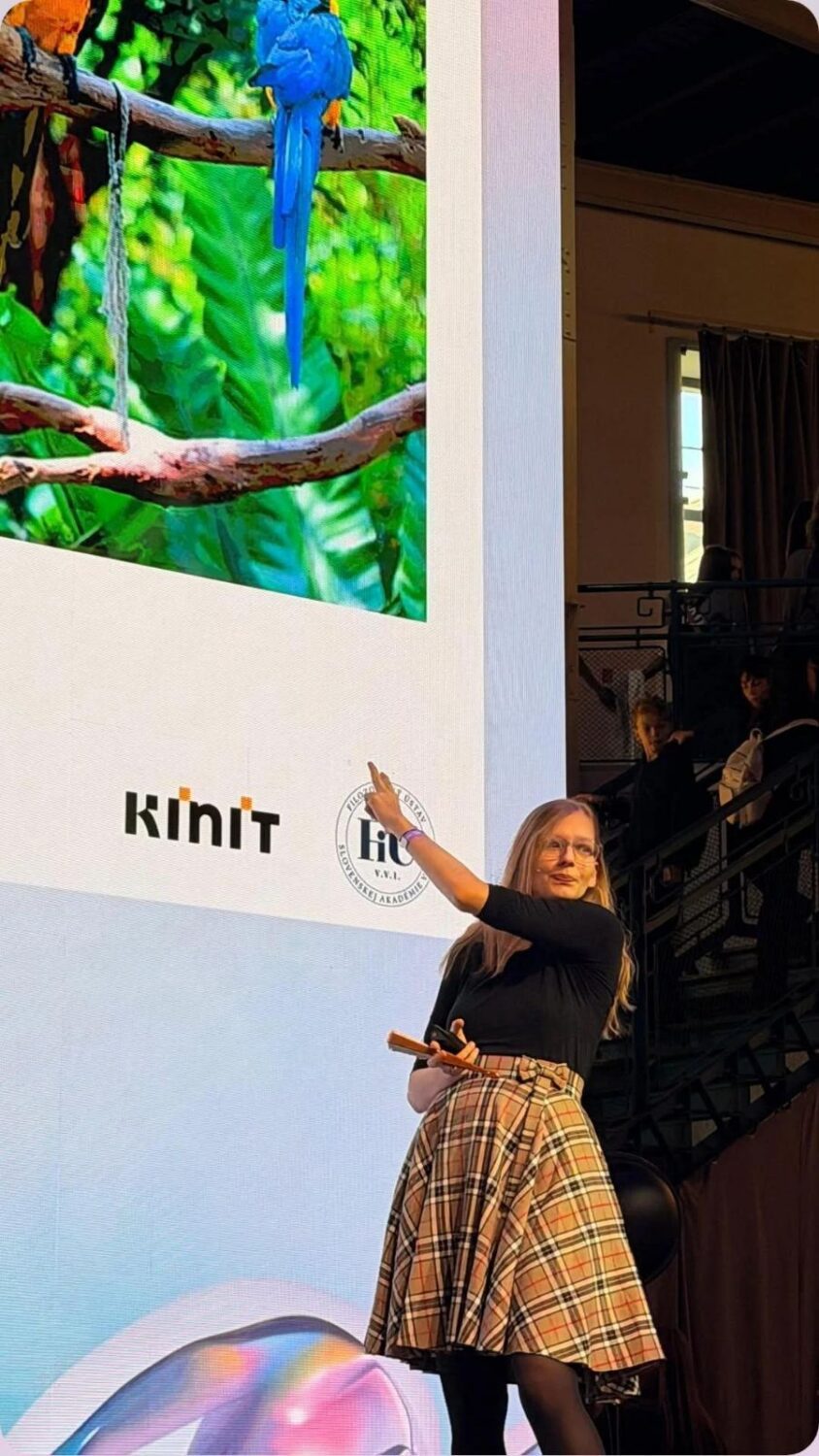
Meanwhile at V-klub, Katarína Marcinčinová joined a discussion for secondary school students about how AI fits into learning and everyday life. Alongside its possibilities for creativity, the session considered what happens to our critical thinking and relationships when we begin to rely on it too much.
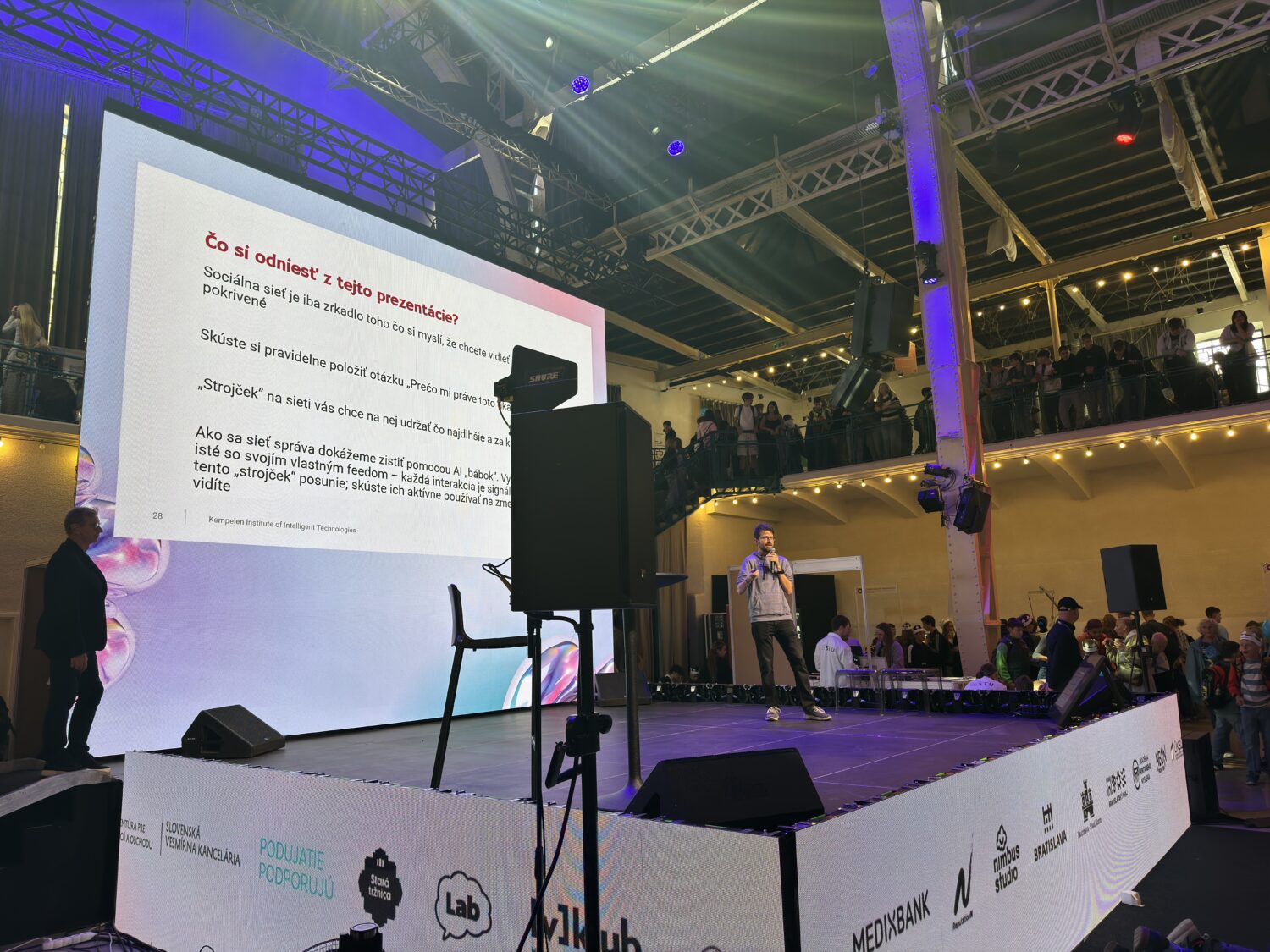
Next, our researcher Branislav Pecher’s TikTok, Instagram and the Battle for Your Attention was about something we all know well, which is scrolling through a feed. How long we watch a video and which posts we skip both shape what shows up next on our screens. Over time, this can narrow the viewpoints we see or push us towards misleading content. Something can grab our attention without giving us a reliable picture of the world.
With that in mind, Branislav also explained how our researchers investigate this. Automated agents simulate how people use social media and record the recommendations they receive. AI is used twice here, first to recommend the content and then to help researchers analyse those recommendations.
Our researcher Gabriela Grmanová also took the stage at the Old Market Hall. In her presentation titled Energy on Four Wheels, she challenged the audience to imagine that an electric car can be useful even when it’s parked. She introduced Vehicle-to-X technology, which allows vehicles to supply energy back to homes or the electricity grid, and presented the V4Grid project. Her talk showed how electric vehicles could help us make better use of renewable energy. Electric vehicles could help us use renewable energy more wisely, and the car parked outside your house might one day help power what’s happening inside it.
The question of what to trust returned in the evening discussion with our researcher Róbert Móro. We have access to enormous amounts of data, and yet scientific evidence can still struggle to compete with impressions and emotions. The panel considered why more information does not always leave us feeling more certain about the world around us.
Thank you for stopping by
One of the best things about European Researchers‘ Night is the chance to talk about our work with the public. As we try out activities together, we also learn from the questions and perspectives visitors share. We hope these conversations have made the technologies that are already part of our everyday lives a little easier to understand.
The atmosphere around our stands was really lovely, and we were so happy to see how many people stopped by. Thank you to everyone who spent part of their day with us, and to our colleagues who made it all happen.
The event was supported by our civic association BrAIn.